What Makes a Bathroom Remodel Truly Successful?
A bathroom renovation can completely change how a home looks and feels, but a successful bathroom remodel involves much more than choosing attractive tiles, a new vanity, and modern fixtures.
Bathrooms are among the most technically demanding spaces in a home. Water, humidity, plumbing, electrical systems, ventilation, waterproofing, storage, and daily use all come together within a relatively small area.
That means good design is only one part of the equation.
A bathroom that looks impressive on the day construction is completed should also remain functional, comfortable, and reliable for years to come.
Understanding what goes into a well-planned bathroom renovation can help homeowners make better decisions before construction begins.
Start With the Right Bathroom Layout
Before selecting finishes, consider how the bathroom actually functions.
An existing layout may have worked when the home was originally built, but that doesn’t necessarily mean it is still the best use of the space.
A renovation provides an opportunity to reconsider the placement of important elements such as:
- Shower
- Bathtub
- Vanity
- Toilet
- Storage
- Lighting
- Doors
- Mirrors
Even in a smaller bathroom, thoughtful planning can make the space feel more open and comfortable.
For example, replacing an oversized fixture, improving the shower configuration, or choosing a vanity better suited to the available space can significantly improve movement through the room.
The goal should be to create a layout that feels natural during everyday use.
Waterproofing Is Behind Every Good Bathroom
Some of the most important parts of a bathroom renovation are the ones you won’t see after the project is finished.
Waterproofing is one of them.
Showers, bathtub surrounds, floors, and other wet areas require appropriate preparation before the visible finishes are installed.
Beautiful tile cannot compensate for poor waterproofing underneath.
Moisture that reaches areas where it doesn’t belong can eventually contribute to damaged materials, mould concerns, or deterioration within the surrounding structure.
This is why the construction behind the finished surfaces deserves just as much attention as the surfaces themselves.
A quality bathroom renovation is built from the inside out.
Ventilation Should Never Be an Afterthought
Bathrooms naturally produce a significant amount of humidity.
Without effective ventilation, that moisture can remain in the room and affect walls, ceilings, paint, finishes, and other materials.
Proper bathroom ventilation helps remove humid air and supports a healthier indoor environment.
When planning a renovation, ventilation should be considered alongside the layout and other mechanical requirements, not after the bathroom has already been designed.
The location and effectiveness of the exhaust system can make a meaningful difference in how the room performs over time.
Choose Materials for the Environment
Bathrooms require materials that can handle moisture, frequent cleaning, temperature changes, and everyday use.
This doesn’t mean homeowners have to sacrifice style.
There are countless options for creating modern, traditional, minimalist, or luxurious bathrooms. The important point is to consider both appearance and performance when selecting materials.
Tile, flooring, countertops, cabinetry, fixtures, and finishes should be appropriate for the environment in which they will be installed.
Durability becomes particularly important in high-use bathrooms.
A material that looks impressive in a showroom may not necessarily be the best choice for every application.
Think Carefully About the Shower
For many homeowners, the shower becomes the focal point of a renovated bathroom.
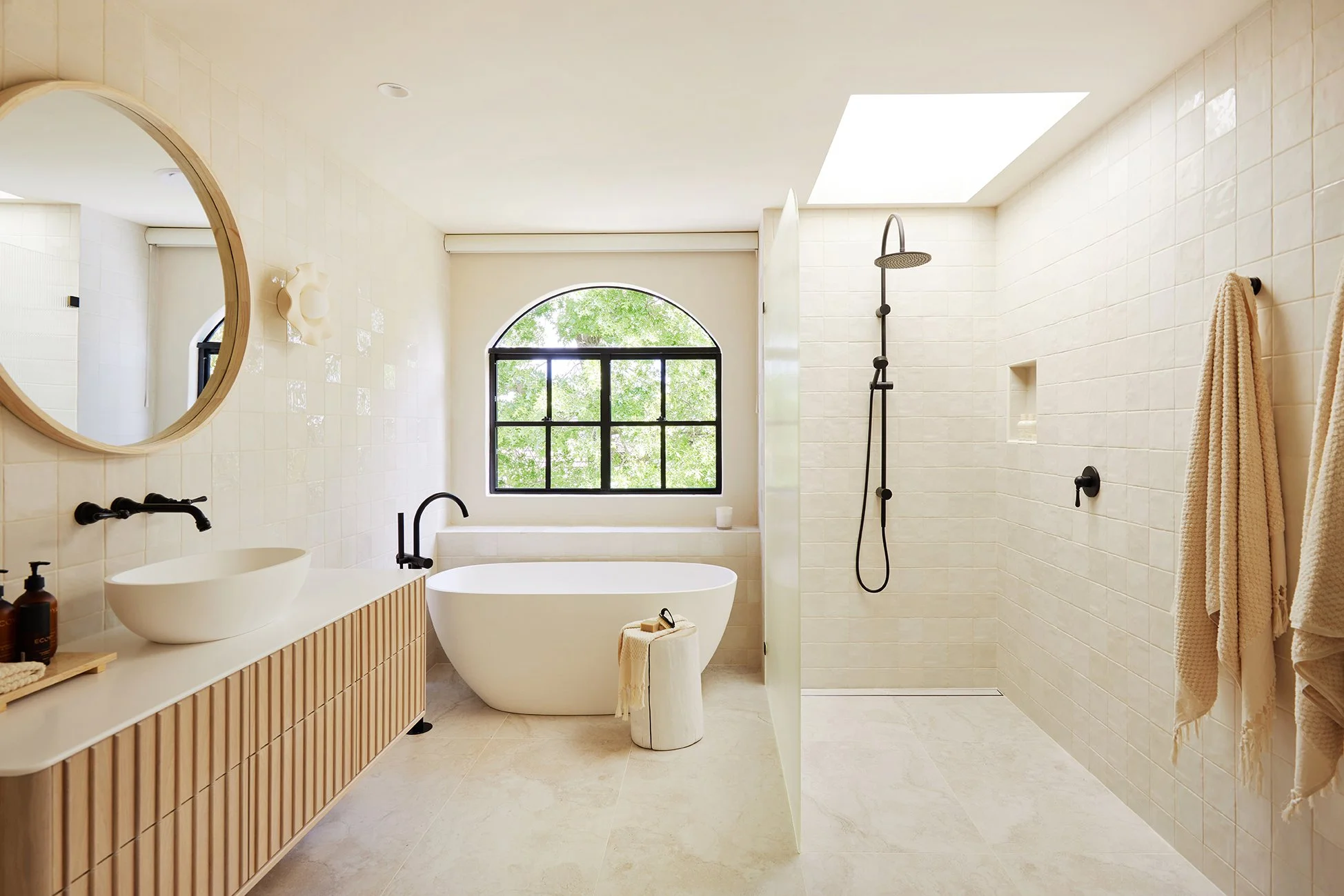
Walk-in showers can create a cleaner, more open appearance and provide opportunities for features such as:
- Glass enclosures
- Built-in niches
- Shower benches
- Multiple shower fixtures
- Large-format tile
- Custom layouts
But the appearance of a shower is only the visible layer.
Drainage, slope, waterproofing, plumbing, and proper installation are all essential to its performance.
The best shower design brings technical construction and visual design together.
Lighting Changes the Entire Space
Bathrooms need more than one type of light.
Bright, functional lighting may be important around the vanity and mirror, while softer lighting can create a more comfortable atmosphere in other parts of the room.
Natural light can also play an important role when the existing architecture allows it.
A thoughtful lighting plan may include a combination of:
- Vanity lighting
- Ceiling fixtures
- Recessed lighting
- Shower lighting
- Accent lighting
- Natural light
Planning these elements early allows electrical work and fixture placement to be properly coordinated during construction.
Storage Makes a Beautiful Bathroom More Practical
A bathroom can look spacious in photographs but become cluttered quickly if storage hasn’t been considered.
Vanities, drawers, cabinets, medicine cabinets, built-in niches, and shelving can all help keep everyday items organized.
The right storage solution depends on who uses the bathroom.
A powder room has very different requirements from a family bathroom or primary ensuite.
Instead of adding storage wherever space happens to remain, it is better to incorporate it into the initial design.
This creates a cleaner finished appearance and makes the bathroom easier to use every day.
Plumbing Changes Require Planning
Moving a sink, toilet, shower, or bathtub can sometimes dramatically improve a bathroom layout.
However, plumbing modifications should be considered carefully because they interact with the existing construction of the home.
The location of supply lines, drains, floor systems, walls, and other building components can influence what changes are practical.
This is particularly important when renovating older homes, where existing conditions may only become fully visible after demolition.
Good planning allows design ideas to work with the building rather than against it.
Don't Ignore What Is Behind the Walls
Renovation often reveals conditions that were invisible before demolition.
Behind bathroom walls and floors, contractors may encounter previous repairs, aging plumbing, damaged materials, inadequate framing, or other issues that should be addressed before new finishes are installed.
Covering these problems with new tile or drywall doesn’t solve them.
One of the advantages of a comprehensive bathroom renovation is the opportunity to inspect accessible areas and properly prepare the space before rebuilding it.
The finished bathroom is only as good as the construction underneath it.
Details Make the Difference
Once the major construction is complete, smaller details begin to shape the final experience.
Hardware placement, grout lines, trim, transitions, fixture alignment, caulking, mirror positioning, and finishing work may seem minor individually, but together they determine whether the bathroom feels carefully built.
Precision matters particularly in bathrooms because so many finishes meet within a relatively small space.
Clean installation creates a result that feels intentional rather than assembled.
Design for Everyday Life
It’s easy to design a bathroom around photographs and trends. It is more important to design one around the people who will actually use it.
Consider questions such as:
Does the bathroom need to accommodate multiple people in the morning?
Is a bathtub actually necessary?
Would a larger shower be more useful?
Is additional storage important?
Does the room need easier accessibility?
Would better lighting improve daily routines?
The answers can lead to a bathroom that works better for the homeowner instead of simply following current design trends.
Building a Bathroom That Lasts
A successful bathroom renovation balances design, construction, and functionality.
The visible elements matter, but so do the waterproofing, plumbing, ventilation, framing, electrical work, and preparation hidden behind the finished surfaces.
When these elements are planned together, the result can be a bathroom that feels beautiful on the first day and continues performing well for years.
At Beaver Wood Construction, we approach bathroom renovations with attention to both the details homeowners see and the construction they don’t. From planning and preparation to installation and finishing, every stage contributes to the final result.
Planning a Bathroom Renovation?
If you’re considering updating or completely transforming your bathroom, contact Beaver Wood Construction to discuss your project and explore the possibilities for your space.